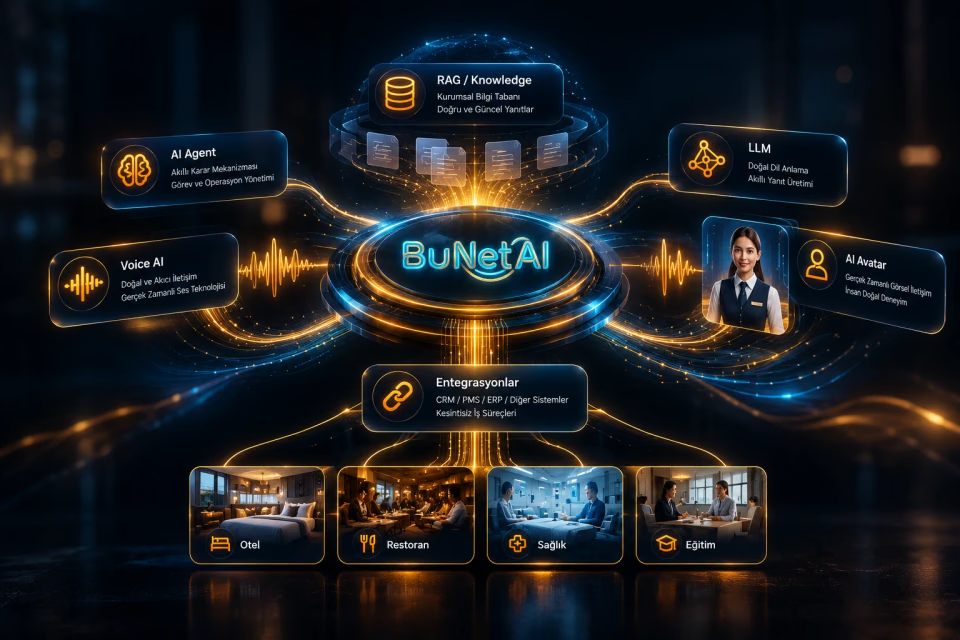
Shared orchestration layer
AI Hotel Assistant, AI Garson, AI Nurse, AI Tezgahtar, and AI Santral look like separate screens. Under them the sequence is the same: take the input, separate the intent, select the organization’s knowledge, produce a reply, and hand off to a person when needed.
AI-Core holds that sequence. Task steps are described on the AI Agent page, the voice channel on Voice AI, and the image on AI Avatar.
Knowledge, LLM, and Agent
Replies are kept to documents and prepared information chosen by the organization. That layer is also summarized in RAG/Knowledge on the home page. If the source does not cover a topic, the system routes to the team instead of guessing.
The model produces the reply. AI Agent runs a defined work step: open a record, classify a request, or transfer it to the right team. The model and the agent are not the same thing.
Where the human team stays in charge
AI-Core does not close a transaction on its own. Payment, diagnosis, legal interpretation, academic decisions, and other topics the organization marks as sensitive go to the relevant team.
Products state this boundary on their own pages. AI Nurse, for example, is for patient and visitor communication and does not claim to diagnose.
Simple architecture
The sequence below is the plain flow shared by the product pages. Each box is a step checked in a pilot, not a marketing name for a software module. Text schema: User → Voice/Text → AI-Core → Knowledge/LLM/Agent → Reply/Avatar → Operational action → Relevant team.
- 01
User
A guest, patient, visitor, or staff member starts the conversation.
- 02
Voice/Text
Input is taken as speech or writing.
- 03
AI-Core
Intent is separated and the product flow is selected.
- 04
Knowledge/LLM/Agent
Enterprise knowledge, the model, and a defined agent step work together.
- 05
Reply/Avatar
The reply is given as voice, text, or a real-time avatar.
- 06
Operational action
A record, route, or request note is created.
- 07
Relevant team
Topics outside the boundary are handed to a person.